collage-design
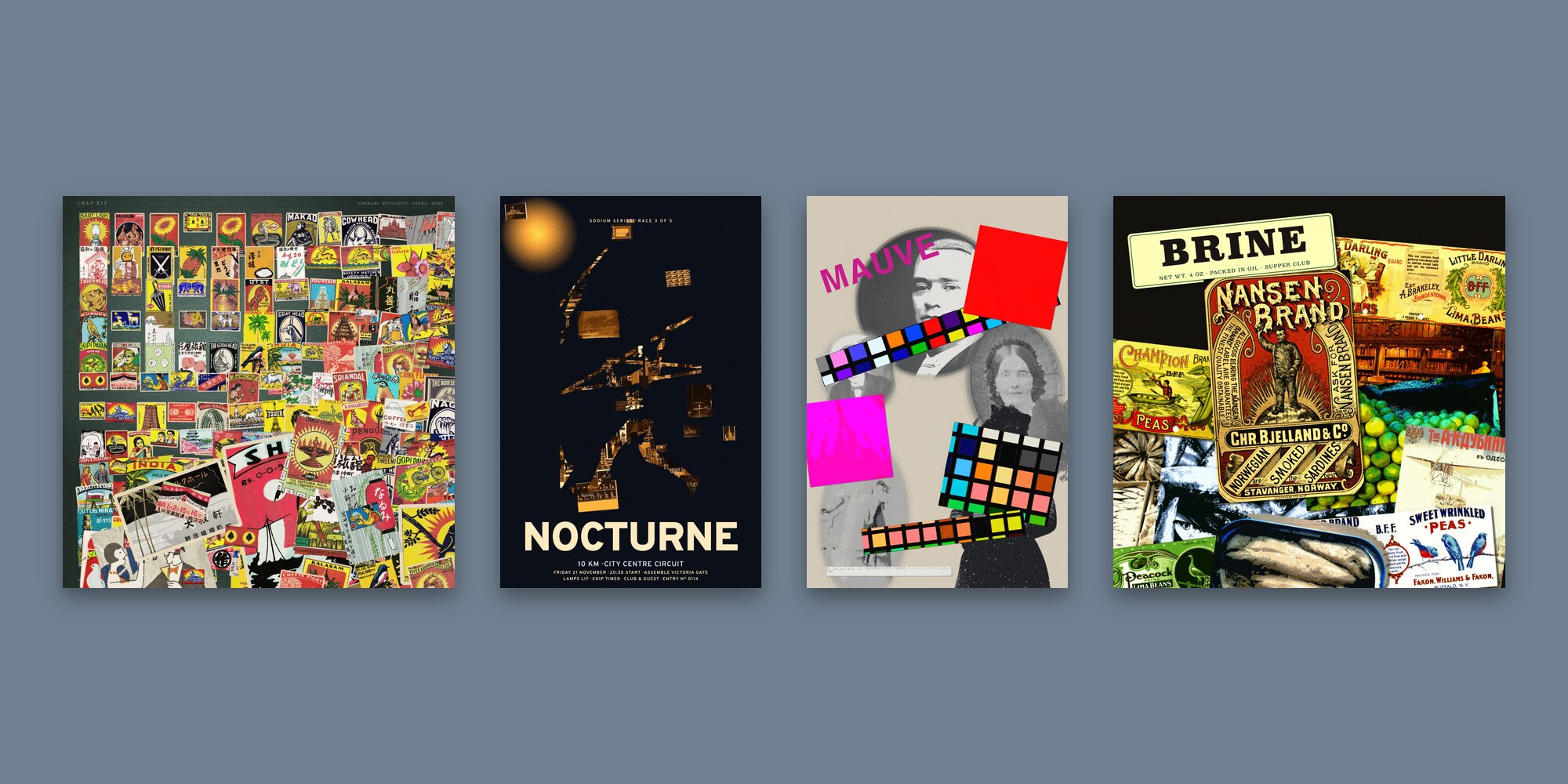
collage-design is a Claude skill that makes cut-and-layer collage art. You describe the picture you want in a sentence or two, and it sources real open licensed photographs and printed material from public archives, cuts them, reconciles them into one palette, and composes a finished piece.
I’ve written separately about how it works. What interested me building it tough was a different problem.
With The Designer’s Arcana I wrote a doctrine and the tools execute inside it. That works because I had a clear intention what all 78 cards had to look like before I made any of them.
Here the vision was on a higher level. A collage skill has to make an image I’ve never seen, out of material I’ve never seen, in a register I haven’t chosen. So the doctrine couldn’t be a fixed constitution, it had to be an approach for writing constitutions.
What the skill does first, is to write a philosophy for that one piece: an invented aesthetic movement naming its register, its palette, how the edges get cut, and what reconciles sources. Everything downstream answers to that document, and it ships alongside the artwork. It’s the aspect I iterated the most on, because it’s the place where a piece figures out it’s rationale.
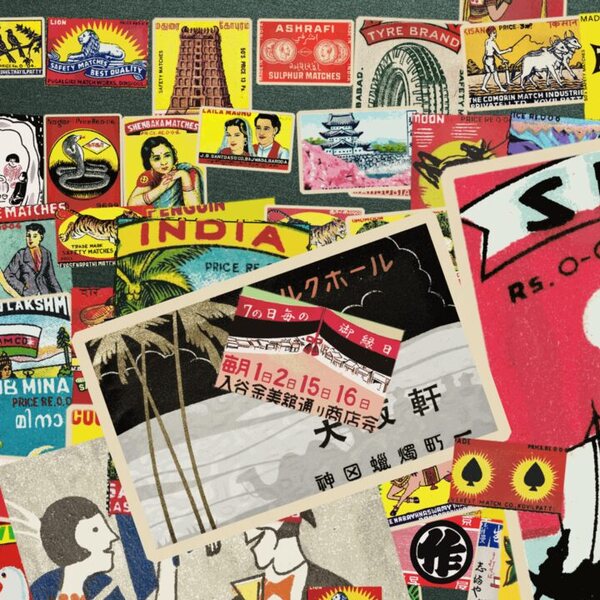
Detail from Strike Anywhere. Three edge languages record how each label entered the collection, and they never blur into each other.
The second layer is what keeps from drifting. The agent working with the invented philosophy will cheerfully justify a bad picture, so the run has four objective measurements, covering occlusion, canvas-edge escape, treatment coverage and scale variance. The philosophy can be as strange as it likes and still has to pass them.
Licensing turned out to be a design constraint rather than a legal footnote, which I hadn’t expected. A collage is a derivative of every fragment in it, so the most restrictive source sets the terms for the whole piece: CC BY-SA is viral and makes your finished artwork copyleft, while CC BY-NC-ND is disqualifying. Licence filtering decides what a picture can be made of, and so it shapes the aesthetic before any composition decision happens. Open archives skew heavily towards particular eras and particular kinds of printing, and the work adopts a style whether you planned it or not.
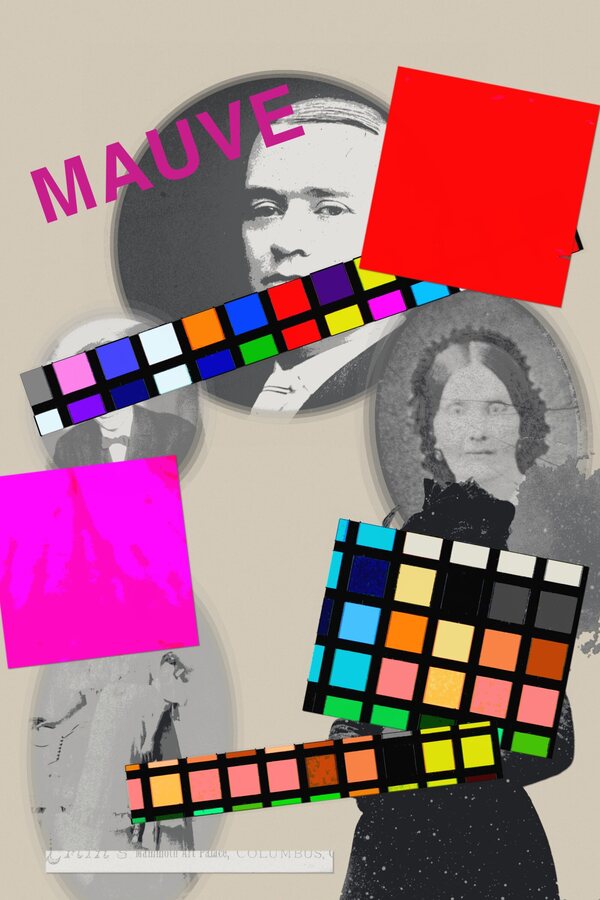
Mauve, where the brief asked for the seam to show. The skill’s default is to unify the sources, so this piece overrides it by name and replaces it with something more disciplined.
Where it still needs a person is taste and judgement. The checks catch drift, they can’t catch boring. The skill finds something genuinely good often enough to be worth the twenty to forty minutes a piece takes. But something merely random the rest of the time, and I can’t yet tell in advance which run will be which. What helps is that the build script comes out parametric, so a piece that nearly works is something you argue with rather than regenerate from scratch.
The next thing I want is more cutting and treatment tools, since that’s where a piece gets its material character. Both take drop-in files, so an invented edge or a new treatment is a first-class citizen rather than a fork of the whole thing.