A data-driven approach to design strategy
- Role
-

Senior UX Manager
@Trustpilot ⊂ 2018 - 2021
Leading a fairly mature design team with a dual-track agile approach was a great experience, but my director and I faced a challenge: a wealth of ideas for improving our practices without a clear direction. We needed a strategic way to prioritize our efforts and make sure we were focusing on the right initiatives. My goal was to create a data-driven roadmap that would help the team make more purposeful priority decisions and become more proactive.
Preparing the evaluation model highlighting key factors
A maturity evaluation as discovery
To address this, I introduced a design maturity evaluation. This method served as a powerful discovery practice, a way to quickly gather insights on our strengths and weaknesses. It gave us an objective view of where we were and what opportunities would have the greatest impact on improving our overall design function.

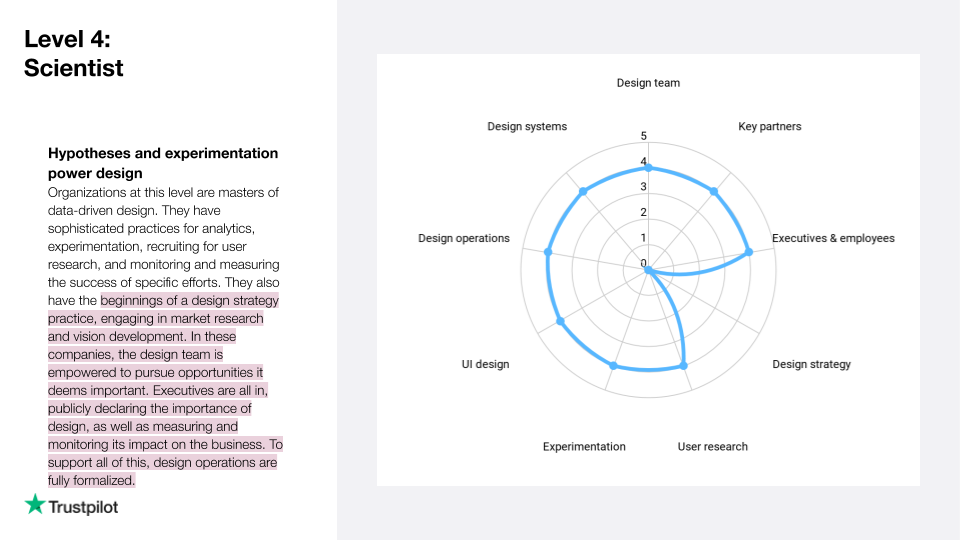
Completed evaluation showing the different organizational maturity levels
For the first round speed, rather than precision was a priority, as we didn’t know if this method indeed provided good pointers or not. I set up the evaluation sheet, did some light interviews with design team members, performed the analysis, and created a summary view with clear recommendations for opportunities.

Part of the evaluation results with recommendations for strategy
The bets it pointed to
The evaluation pointed at a few clear bets:
- User journeys and personas, to give design critique something to lean on.
- Experience visions, to push onboarding further out than the next sprint.
- Promoting our own people, rather than hiring over them.
Retention improved, the team started picking its own initiatives instead of waiting to be asked, and product decisions got better evidence to argue with.