
Aligning teams through an IA redesign
When I joined Trustpilot, the product organization was struggling with a key challenge: a fragmented B2B app experience caused by autonomous teams working each on their own roadmap. Each team had its own menu item, each item screaming for attention. This created a confusing user journey, especially during onboarding, a key challenge for growth.
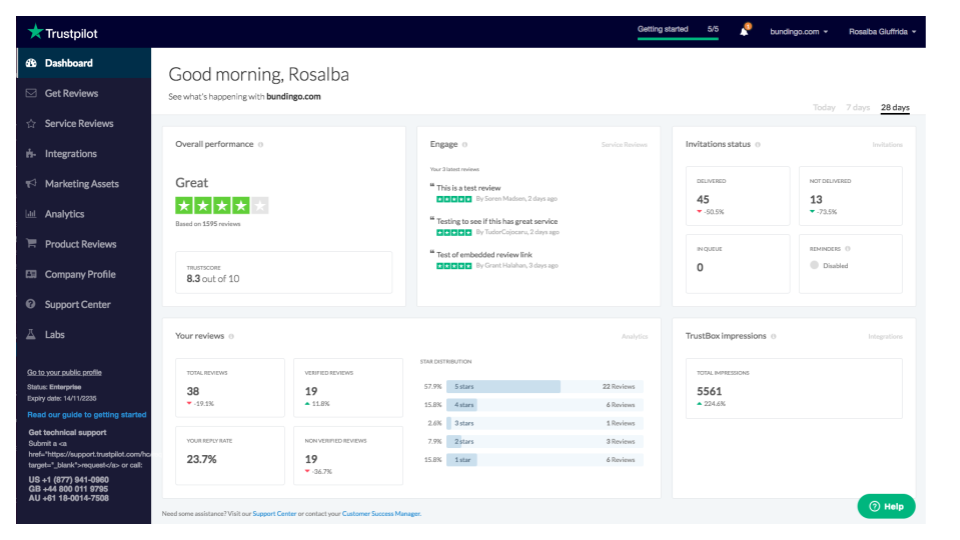
To solve this, I partnered with a product manager and their team to lead an information architecture project focused on redesigning the main menu. While one product team drove the work, all 7 product teams contributed by revising structures in their own areas, and we engaged ~20 teams across the organization, about 50-60 stakeholders including commercial teams like support and customer success.

Our core principle was simple: a better information architecture requires both a better understanding of our organization and its users. To get everyone on the same page, we designed a strategic process with four parallel tracks, ensuring our solution would be both user-centered and internally aligned.
- User research track: We wanted to understand how current users perceived the app and intended to continuously test versions via usability testing, card sorting, and tree testing. This was our core discovery track.
- Alignment track: We did workshops with all product teams and key stakeholders over several weeks, understanding key concerns, ambitions, and expectations towards the new IA while also getting buy-in. With some groups, we set up further workshops to understand how the new menus would impact their work.
- Design track: We involved the entire design team to widen our solution space, proving that great ideas come from a collaborative culture.
- Prototype track: We used a running prototype from day one to test our vision, turning abstract concepts into a tangible experience we could validate and refine.
I was working within each of these tracks both as coach and the occasional player in various ways to enable and support the individual contributors driving them.

After three months, we had a solution that was agreed upon by everyone. The results spoke for themselves: a ~20% increase in intended user flows, customer success teams reporting significantly easier onboarding for new customers, and an IA foundation so solid it was still in use 5+ years later. Our success was not just in the metrics, but in proving that internal alignment along a coherent user journey is a strategic business driver, one that compounds over time.