Rebuilding the model behind a pricing page
- Role
-

Lead Experience Designer
@Canonical ⊂ 2024 -
As the lead designer for Ubuntu Pro, a subscription bundle across a portfolio of products, my challenge was to scale the buying journey from product-level to portfolio-level. The pricing page was the obvious first step, and it turned out to be more involved than a simple redesign.
The old page had been built when the offering was simpler. Over time it stopped following the product, not showing the full stack of what was covered. A driver of change was when the sales team quietly stopped using it.
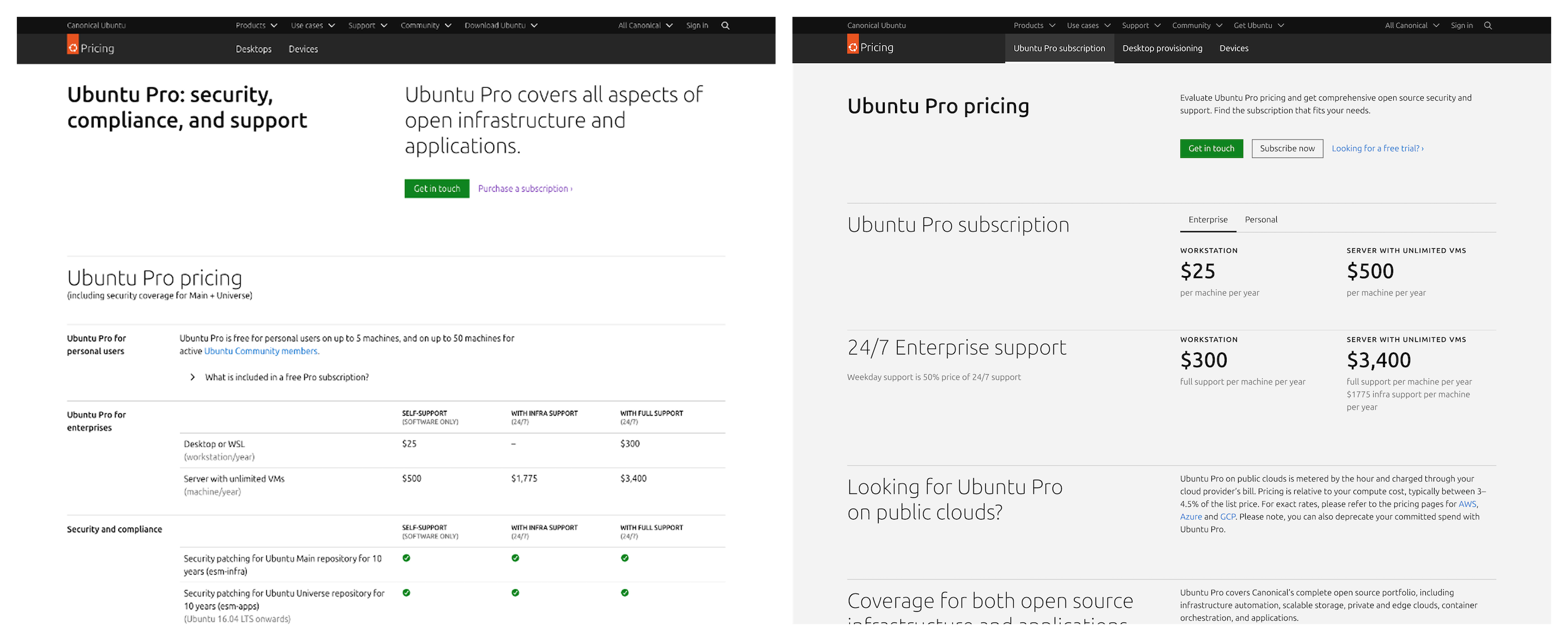
Old and new pricing pages
From one matrix to two questions
The page was one comparison matrix: products down the side, three support tiers across the top, a green tick at each intersection.
That shape works when the packages are simple, but our offering was a complex portfolio of products for enterprise IT stacks. The matrix wasn’t cluttered, it was structurally incapable of describing what we sold.
So I separated the two questions it had tangled together:
- What it costs became composable: a base subscription, with support and cloud metering as separate add-ons, rather than three pre-bundled tiers.
- What’s covered became a tree: five categories, a few capabilities inside each, and an availability and details pairing in place of ticks, so conditions could finally be written in words.
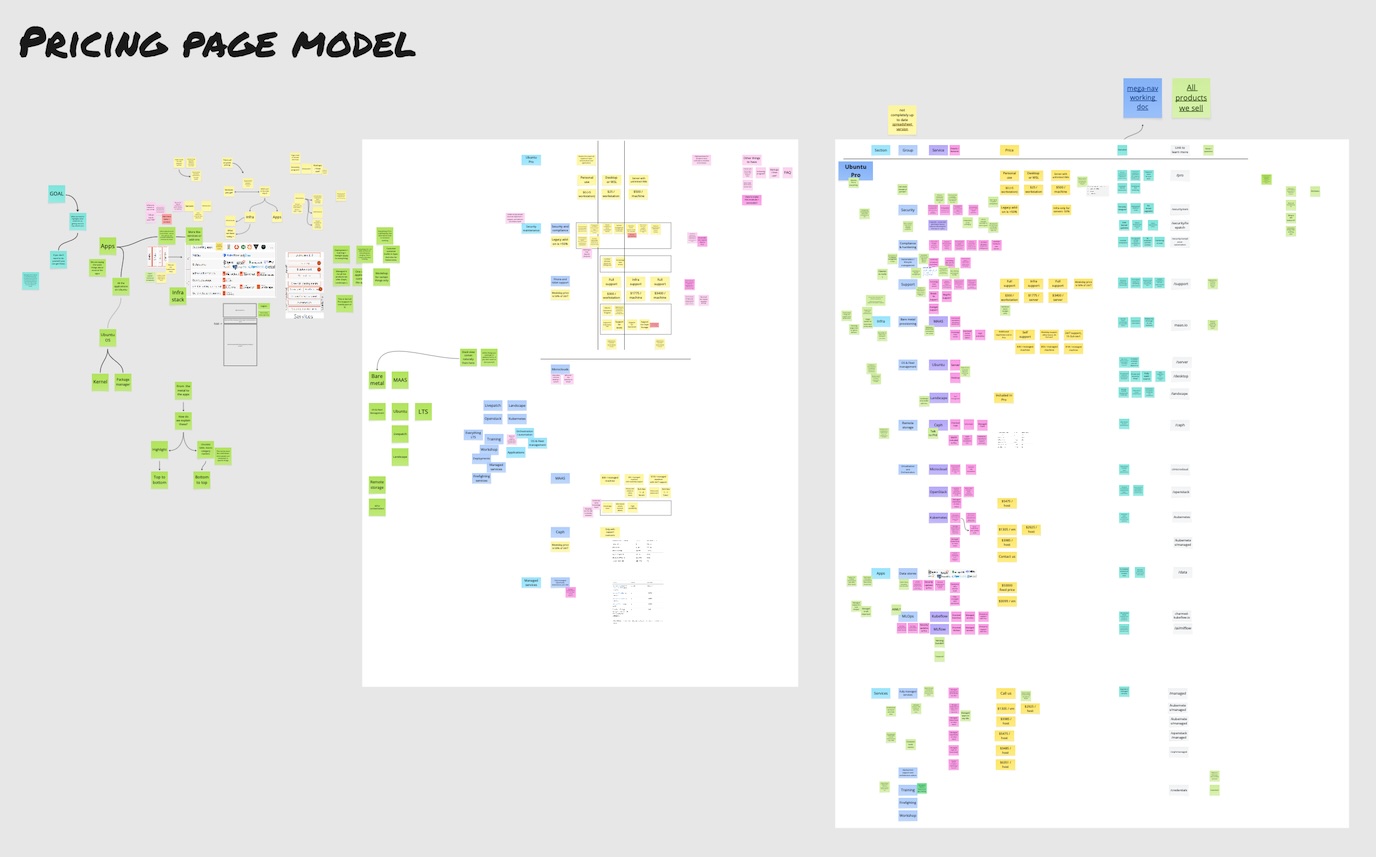
Pricing model overview
Getting there meant collecting product descriptions from 10+ teams and aligning how each part of the portfolio was presented. That alignment was where most of the complexity lived, getting each team to agree how their piece appeared.
When a page works for self-service users and sales conversations alike, the underlying model is doing its job.
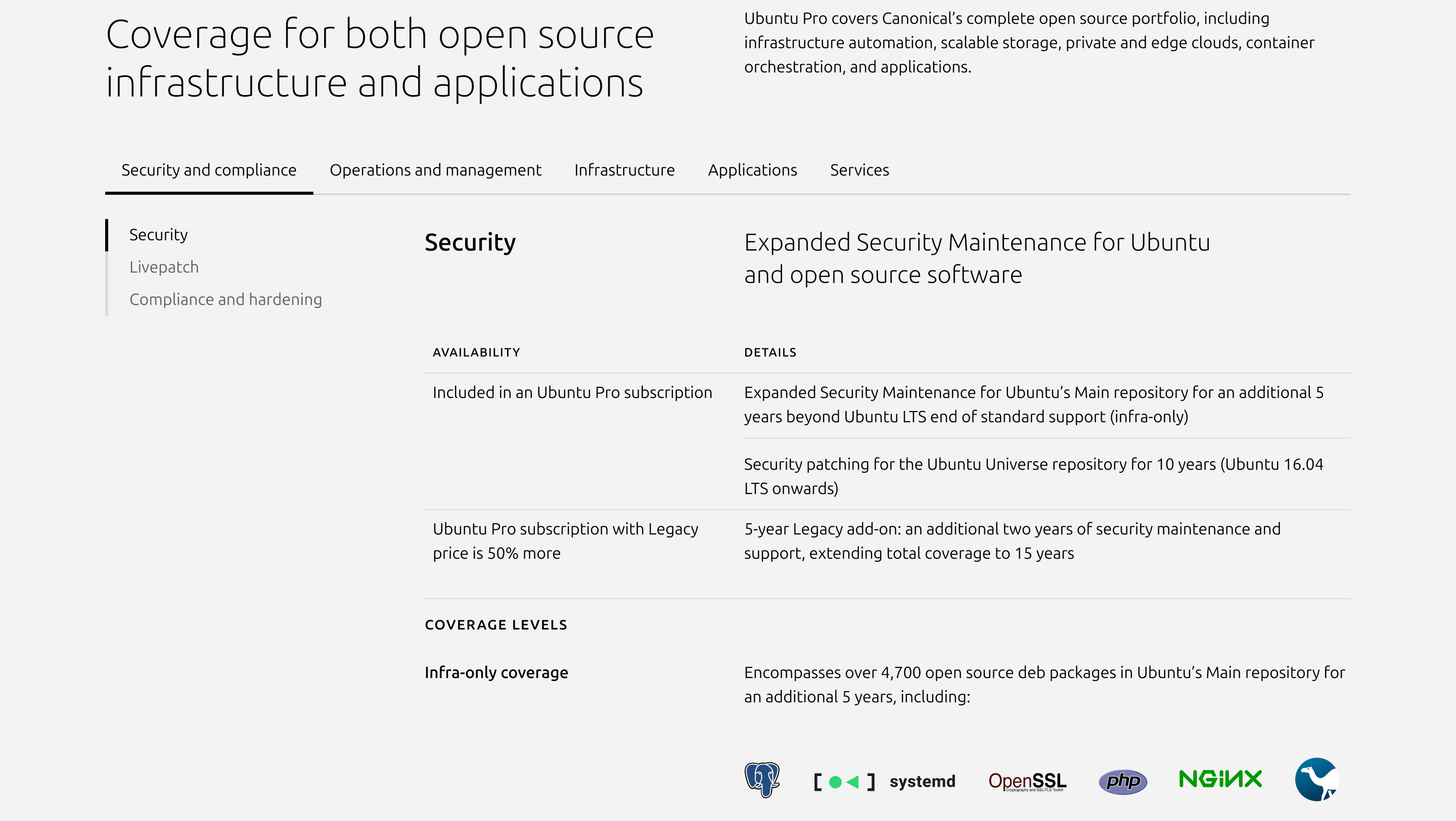
Pricing page details, a simple overview of a complex offering
What changed
A/B testing showed the new page converted ~10% better. More telling, the sales team started using it again, both to pitch prospects and as plain documentation for customers.
- ~10%
- conversion lift, A/B tested
- 10+ teams
- aligned on one model
- Sales
- using the page again
The structure has since had the better test. The page now carries modules the original never anticipated, priced in shapes it had no concept of, like cluster capacity charged per terabyte. They slot in as new branches rather than as exceptions.